

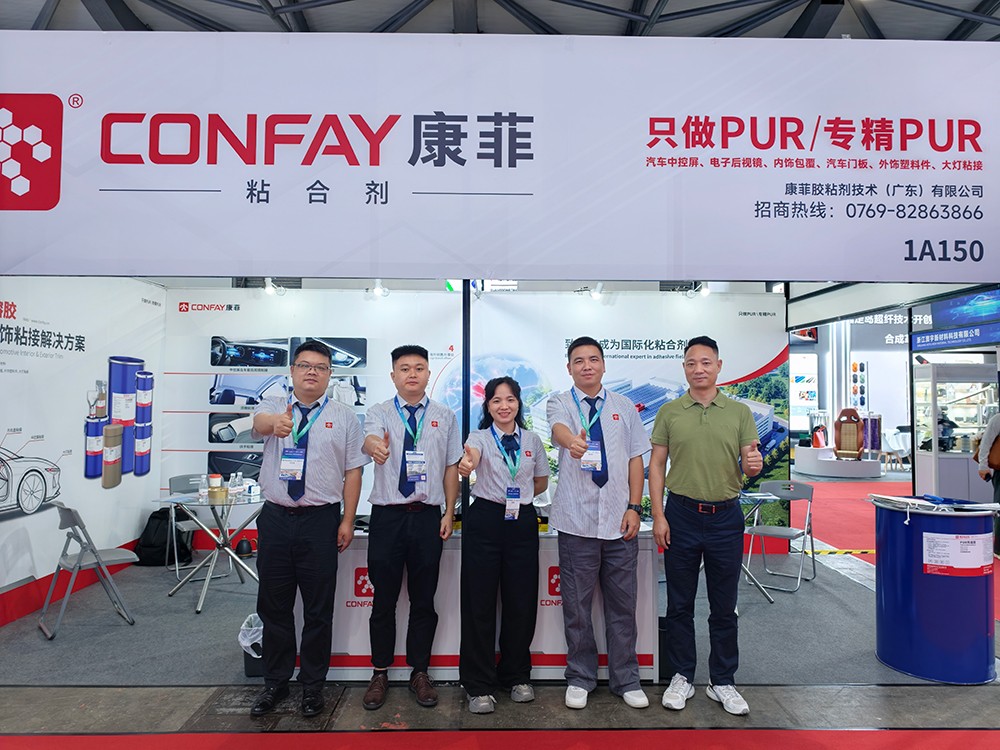
Confay Adhesive Technology (Guangdong) Co., Ltd. sincerely invites automotive manufacturers, Tier 1 and Tier 2 suppliers, automotive interior and exterior component manufacturers, material suppliers, and adhesive distributors to visit us at the 2026 21st Shanghai International Automotive Interiors & Exteriors Exhibition & Intelligent Cockpit and Driving Integration Technology Exhibition.
With the automotive industry placing increasing demands on lightweight materials, integrated components, appearance quality, and manufacturing efficiency, adhesive bonding is becoming an increasingly important process for connecting different automotive materials.
At this exhibition, Confay will focus on automotive interior and exterior bonding applications, providing visitors with an opportunity to discuss adhesive selection, substrate compatibility, process requirements, and application testing with our technical team.
Exhibition Information
Exhibition: 2026 The 21st Shanghai International Automotive Interiors & Exteriors Exhibition & Intelligent Cockpit & Driving Integration Technology Exhibition
Date: August 12–14, 2026
Venue: Shanghai New International Expo Centre, Shanghai, China
Booth No.: N1-1A150
Exhibitor: Confay Adhesive Technology (Guangdong) Co., Ltd.
Application Focus: Automotive Interior & Exterior Bonding
Welcome to visit Confay at Booth N1-1A150 and explore practical adhesive solutions for automotive applications.
1. Product Definition: What Are Automotive Bonding Adhesives?
Automotive bonding adhesives are functional adhesive materials designed to join different substrates and components during vehicle manufacturing and assembly.
Compared with mechanical fastening methods, adhesive bonding can be used to create continuous bonding interfaces while accommodating different component designs and material combinations.
For automotive interior and exterior applications, however, an adhesive cannot be selected simply according to its nominal bonding strength.
A suitable automotive adhesive needs to be evaluated according to multiple factors, including:
Substrate compatibility
Initial adhesion
Final bonding strength
Temperature resistance
Humidity and water resistance
Vibration resistance
Aging performance
Application temperature
Viscosity
Open time or setting time
Production line speed
Glue line appearance
This makes adhesive selection a material-process-performance matching problem, rather than simply a price comparison.
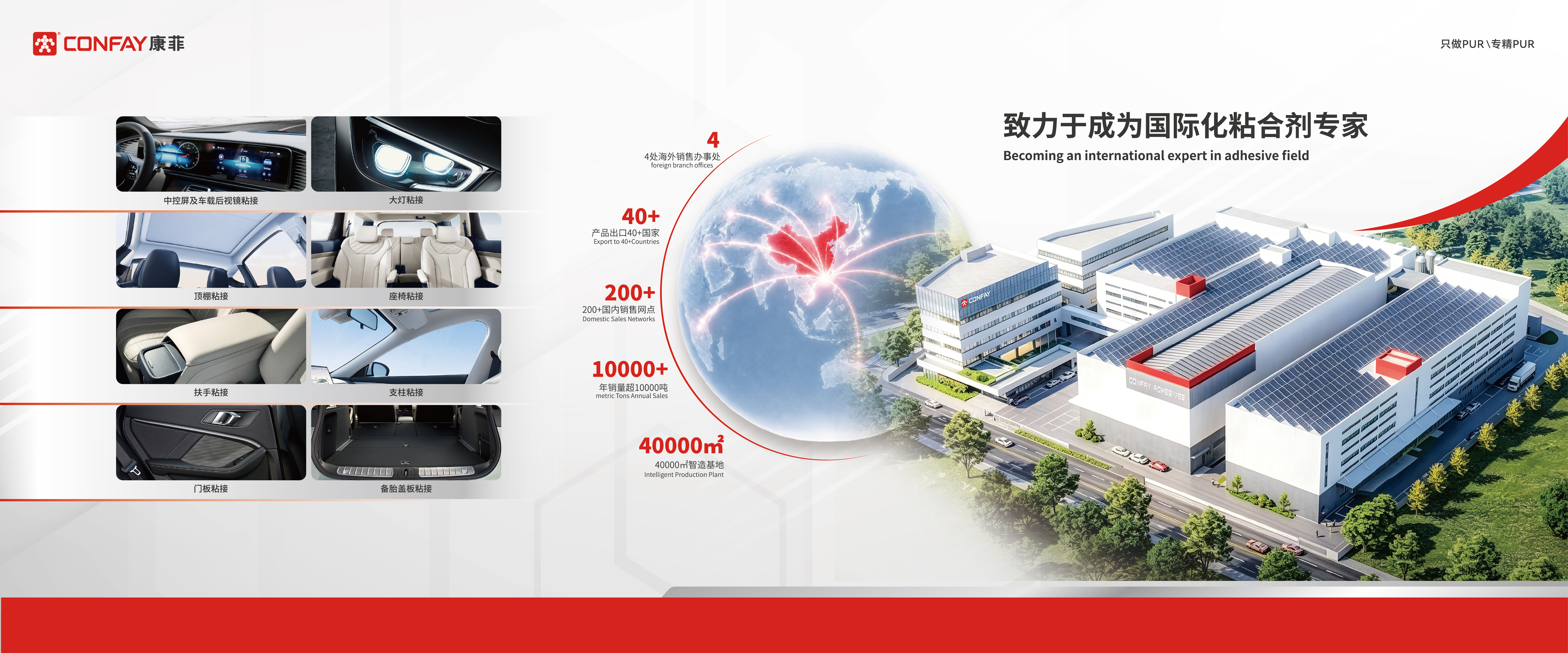
As an adhesive manufacturer, Confay Adhesive Technology (Guangdong) Co., Ltd. focuses on providing adhesive solutions according to customers' specific bonding materials and manufacturing requirements.
2. Application Scenarios: Where Are Automotive Adhesives Used?
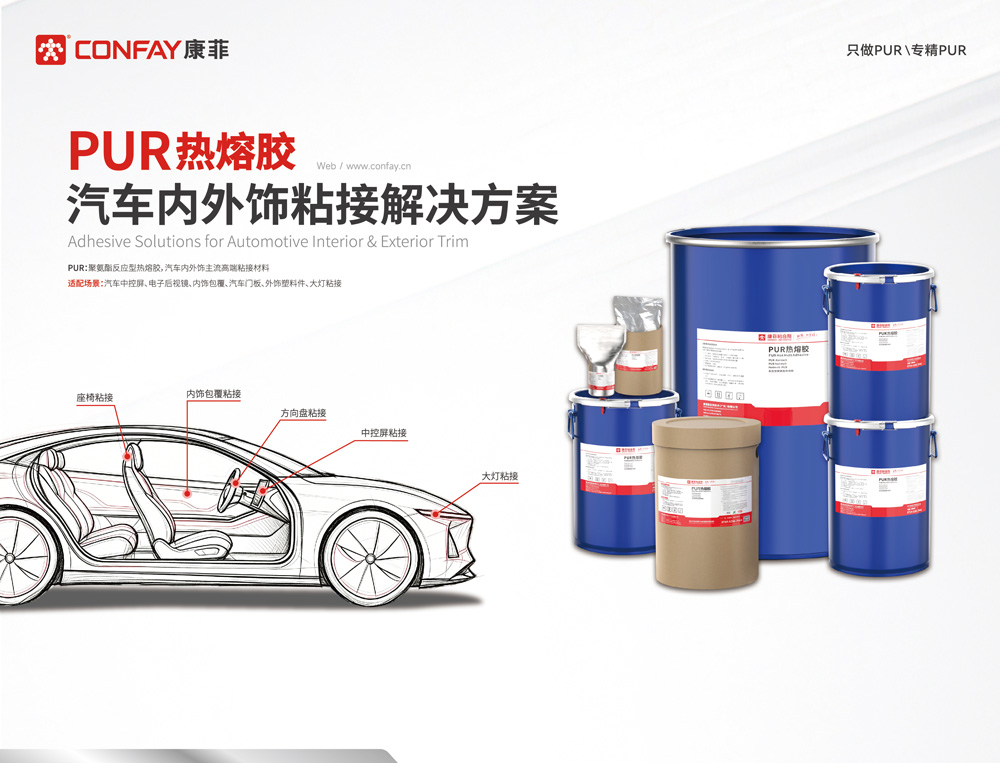
Automotive Interior Bonding
Automotive interiors contain numerous components made from different materials. These components need to maintain stable adhesion while meeting strict requirements for appearance, comfort, and durability.
Depending on the component design and manufacturing process, adhesive bonding can be considered for applications such as:
Interior trim components
Door trim assemblies
Decorative panels
Soft-touch components
Fabric and textile bonding
Foam bonding
Plastic components
Composite interior materials
For visible interior components, the adhesive solution must not only provide reliable bonding but also support a clean and consistent appearance.
Automotive Exterior Bonding
Automotive exterior components experience more demanding environmental conditions than many indoor applications.
Exterior bonding interfaces may be exposed to:
Temperature fluctuations
Moisture
Rain
UV exposure
Vibration
Mechanical stress
Long-term outdoor aging
Potential applications include:
Exterior decorative trim
Automotive decorative strips
Plastic components
Composite components
Exterior panels and related assemblies
Sealing and bonding interfaces
For these applications, weather resistance and long-term bonding stability are particularly important considerations during adhesive selection.
Bonding Different Automotive Materials
Modern vehicles increasingly use combinations of plastics, textiles, foams, composites, metals, and decorative materials.
This creates a major challenge for adhesive selection because different substrates can have significantly different:
Surface energy
Surface roughness
Thermal expansion behavior
Chemical characteristics
Moisture sensitivity
For example, an adhesive suitable for fabric-to-foam bonding should not automatically be assumed to provide the same performance for plastic-to-composite bonding.
Therefore, Confay recommends evaluating the actual substrate combination before finalizing an adhesive solution.
3. Technical Parameters: What Should Buyers Evaluate?
When purchasing automotive adhesive, buyers should establish technical requirements before comparing suppliers.
The following parameters are particularly important.
| Technical Parameter | What Buyers Need to Evaluate |
|---|---|
| Initial Adhesion | Whether components remain positioned during assembly |
| Final Bonding Strength | Long-term reliability of the bonded interface |
| Peel Strength | Resistance to separation under peeling forces |
| Shear Strength | Resistance to forces parallel to the bonding interface |
| Temperature Resistance | Performance under specified temperature conditions |
| Humidity Resistance | Bond stability under humid environments |
| Water Resistance | Performance when exposed to water or moisture |
| Aging Resistance | Performance retention after accelerated aging |
| Viscosity | Suitability for coating, spraying, dispensing or other application methods |
| Open Time | Whether the adhesive working window matches the assembly process |
| Setting/Curing Speed | Compatibility with production takt time |
| Substrate Compatibility | Whether the adhesive works reliably with the target materials |
For automotive manufacturers, these parameters should ultimately be evaluated against the actual component structure and production process.
A technically strong adhesive on paper may still be unsuitable if its application temperature, open time, viscosity, or setting speed does not match the customer's equipment and production line.
4. Automotive Adhesive Purchasing: 5 Questions You Should Ask Before Ordering
Question 1: What materials will be bonded?
The first question should always be:
What are the exact substrates?
For example:
Plastic + fabric
Foam + textile
Plastic + composite
Decorative material + substrate
Composite + metal
The more accurately the materials are identified, the more targeted the adhesive recommendation can be.
Question 2: What is the production speed?
Production speed directly affects adhesive process requirements.
A high-volume automotive production line may require an adhesive with a precisely controlled working window and setting behavior.
Purchasers should therefore provide:
Production line speed
Assembly cycle time
Application method
Adhesive application equipment
Required positioning time
This allows the adhesive supplier to evaluate process compatibility rather than simply recommending a general-purpose product.
Question 3: What environmental conditions will the component face?
For automotive exterior applications, buyers should consider:
Temperature + humidity + water + UV + vibration + aging
For interior applications, additional factors may include:
Interior temperature changes
Humidity
Repeated mechanical stress
Appearance requirements
Material compatibility
The adhesive should be evaluated according to the actual service environment.
Question 4: Is the adhesive price really the most important cost?
Not necessarily.
A lower adhesive price may not result in lower overall production costs if the adhesive causes:
Excessive consumption
Poor positioning
Bonding failures
Rework
Production interruptions
Customer complaints
For automotive manufacturing, buyers should compare total application cost and bonding reliability, rather than only the price per kilogram.
Question 5: Can the supplier provide application testing?
This is one of the most important questions for automotive adhesive procurement.
Before mass production, buyers should ideally conduct testing using the actual or representative:
Substrate
Component structure
Application method
Production conditions
Environmental requirements
A supplier capable of supporting sample evaluation and technical communication can significantly reduce the risk of selecting an unsuitable adhesive.
5. Data Evidence: How Should Automotive Adhesive Performance Be Verified?
For automotive applications, statements such as "strong adhesion," "excellent durability," or "high temperature resistance" are not enough to support a purchasing decision.
Performance should be converted into measurable test results.
1. Peel Strength Testing
Peel testing measures the force required to separate bonded materials.
It is useful when evaluating flexible materials, films, fabrics, and other bonded structures where peeling forces may occur.
2. Shear Strength Testing
Shear testing evaluates the adhesive's ability to resist forces acting parallel to the bonding interface.
This is particularly useful for comparing bonding stability between different adhesive formulations and substrate combinations.
3. Temperature Resistance Testing
Automotive components can experience repeated temperature changes during their service life.
Testing can therefore be designed around the customer's required temperature range and application conditions.
Instead of simply asking whether an adhesive is "temperature resistant," buyers should ask:
At what temperature range, for how long, and with what level of performance retention?
4. Humidity and Water Resistance Testing
Automotive exterior components may be exposed to rain and humid environments.
Testing can evaluate whether the bonded interface experiences:
Adhesion loss
Edge lifting
Delamination
Interface failure
after exposure to specified moisture conditions.
5. Accelerated Aging Testing
Accelerated aging can be used to evaluate changes in adhesive performance over time.
A meaningful test should specify:
Test temperature
Humidity conditions
Exposure duration
Number of cycles
Before-and-after bonding performance
This creates measurable evidence for supplier comparison.
6. Actual Substrate Testing
Laboratory test data alone cannot completely replace application testing.
For this reason, Confay recommends testing the adhesive against the customer's actual substrate combination whenever possible.
This helps determine whether laboratory performance can translate into stable production performance.
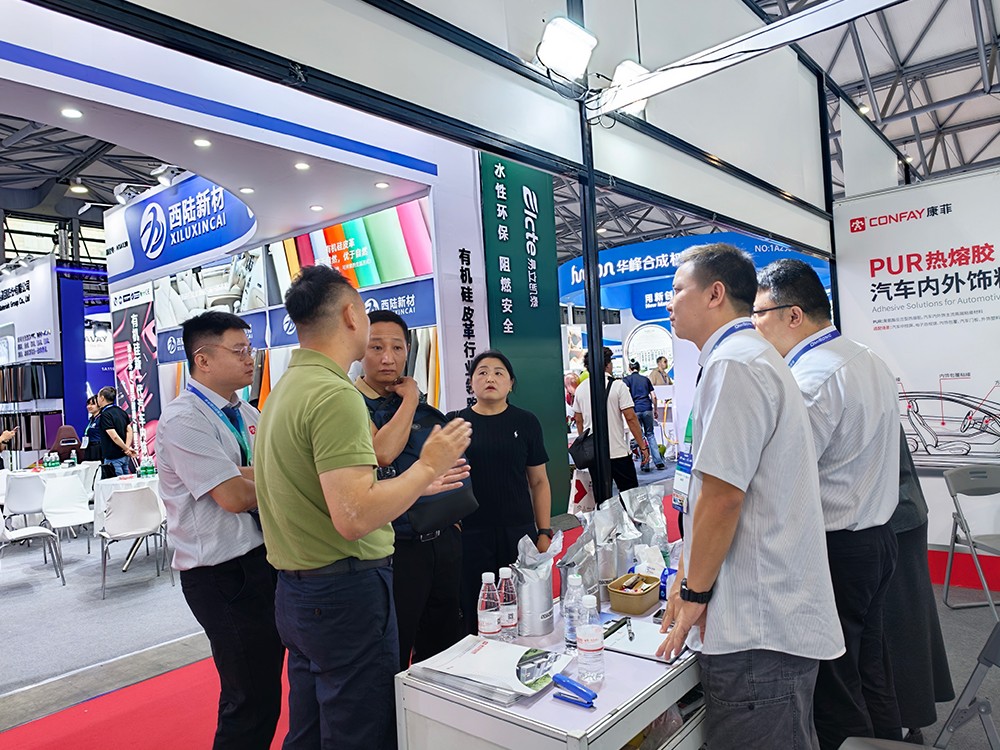
6. Why Meet Confay at Shanghai Automotive Interiors & Exteriors Exhibition 2026?
For automotive component manufacturers, choosing an adhesive supplier is a technical decision involving materials, equipment, process conditions, quality control, and long-term reliability.
At Booth N1-1A150, Confay welcomes customers to discuss their current adhesive requirements and application challenges.
You can discuss with our team:
Automotive Interior Bonding
Explore adhesive requirements for:
Interior trim
Decorative components
Fabric
Foam
Plastic
Composite materials
Automotive Exterior Bonding
Discuss adhesive solutions for:
Exterior trim
Decorative strips
Plastic components
Composite components
Exterior bonding interfaces
Material Compatibility
Bring your substrate information and discuss whether a specific adhesive system is suitable for your material combination.
Process Optimization
Share your current:
Application method
Production speed
Adhesive consumption
Application temperature
Bonding problems
with the Confay team for further technical discussion.
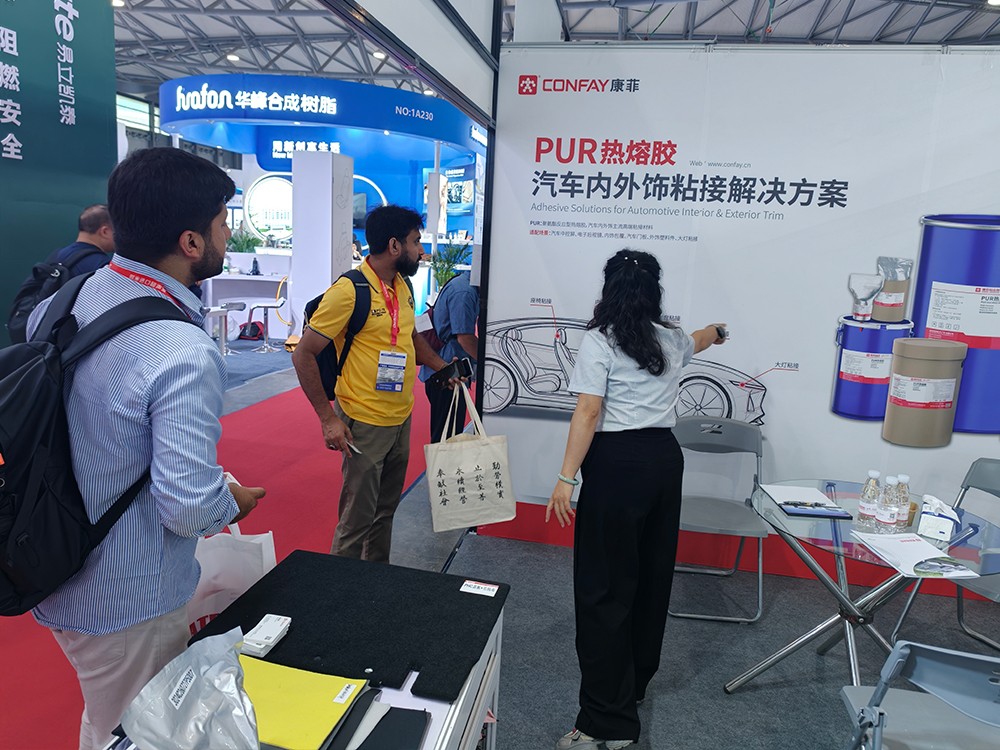
7. Conversion Path: From Exhibition Meeting to Adhesive Solution
A successful automotive adhesive project should not end with a product catalogue or price quotation.
Confay recommends the following cooperation process:
Step 1 — Application Assessment
Identify the automotive interior or exterior component and its bonding requirements.
Step 2 — Material Confirmation
Confirm the actual substrates, surface treatment, component structure, and bonding area.
Step 3 — Process Analysis
Evaluate:
Application method
Equipment
Production speed
Application temperature
Open time
Required setting time
Step 4 — Sample Selection
Confay recommends potentially suitable adhesive solutions according to the project requirements.
Step 5 — Laboratory & Application Testing
Conduct bonding tests using the customer's actual or representative substrates.
Step 6 — Performance Verification
Evaluate bonding strength, appearance, environmental resistance, and process stability according to the agreed test conditions.
Step 7 — Production Validation
Move the validated adhesive solution into pilot production and verify its performance under actual manufacturing conditions.
Step 8 — Mass Production Support
After successful validation, Confay can continue supporting the customer with adhesive selection, application guidance, and production-related technical communication.
This approach helps automotive manufacturers move from "finding an adhesive" to "building a verified bonding solution."
Visit Confay at Booth N1-1A150
The automotive industry is evolving toward lightweight materials, integrated components, intelligent cockpits, and increasingly sophisticated interior and exterior designs. These developments are creating new requirements for reliable industrial bonding.
Confay Adhesive Technology (Guangdong) Co., Ltd. looks forward to meeting automotive manufacturers, component suppliers, engineers, purchasing teams, and adhesive distributors at the 2026 21st Shanghai International Automotive Interiors & Exteriors Exhibition & Intelligent Cockpit & Driving Integration Technology Exhibition.
Exhibition Details
Event: 2026 The 21st Shanghai International Automotive Interiors & Exteriors Exhibition & Intelligent Cockpit & Driving Integration Technology Exhibition
Date: August 12–14, 2026
Venue: Shanghai New International Expo Centre, Shanghai, China
Booth No.: N1-1A150
Application Focus: Automotive Interior & Exterior Bonding
Exhibitor: Confay Adhesive Technology (Guangdong) Co., Ltd.
Warmly Welcome to Visit Confay at Booth N1-1A150!
If you are currently looking for an automotive adhesive supplier, have a new interior or exterior bonding project, or are experiencing bonding problems in production, bring your substrate information, application requirements, or current adhesive samples to the exhibition.
Let's discuss a more suitable adhesive solution for your automotive bonding project.
Confay — Adhesive Technology for Better Automotive Bonding.
