

Many furniture manufacturers assume the adhesive is the problem when edge banding fails. In reality, incorrect machine settings are often the real culprit.
If your edge banding is peeling, lifting, or showing weak adhesion, don't rush to replace your PUR adhesive just yet.
At Confay Adhesive Technology (Guangdong) Co., Ltd., we've helped hundreds of woodworking factories solve bonding problems. Surprisingly, many issues can be fixed by optimizing just four processing parameters: temperature, pressure, glue application, and open time.
In this guide, we'll introduce a simple 3-step troubleshooting method that can help you quickly identify the root cause and restore strong, reliable edge bonding.
Why Does Edge Banding Fail Even with Good PUR Adhesive?
Many operators immediately blame the adhesive when they encounter:
Edge banding peeling off
Weak bonding strength
Corner lifting
Delamination after several days
Poor initial tack
However, in many cases, the adhesive itself performs exactly as designed.
The real issue often lies in the machine settings.
PUR hot melt adhesive is extremely sensitive to processing conditions. Even premium adhesives cannot achieve optimal bonding if the equipment parameters are incorrect.
Before changing your adhesive supplier, it's worth checking these three critical areas first.
Step 1: Verify the Actual Glue Temperature
Why Temperature Is So Important
Temperature is the first factor every operator should check.
Many edge banding machines display the glue pot temperature digitally, but the displayed value isn't always the actual adhesive temperature.
Over time, sensors may drift, heaters may wear, or temperature controllers may become inaccurate.
A machine displaying 140°C might actually be operating at 130°C or 150°C.
Even a small deviation can significantly affect PUR adhesive performance.
Problems Caused by Low Temperature
When the glue temperature is too low:
Adhesive becomes too viscous
Poor flowability
Uneven glue coating
Weak wetting of the substrate
Insufficient bonding strength
Common symptoms include:
Edge opening
Poor initial tack
Thick glue lines
Incomplete adhesive transfer
Problems Caused by High Temperature
Excessive temperature can also create serious problems.
When PUR adhesive overheats:
Viscosity becomes too low
Moisture reaction accelerates
Open time becomes shorter
Adhesive may begin curing before pressing
This often results in:
False bonding
Weak long-term adhesion
Brittle glue lines
Reduced heat resistance
Best Practice
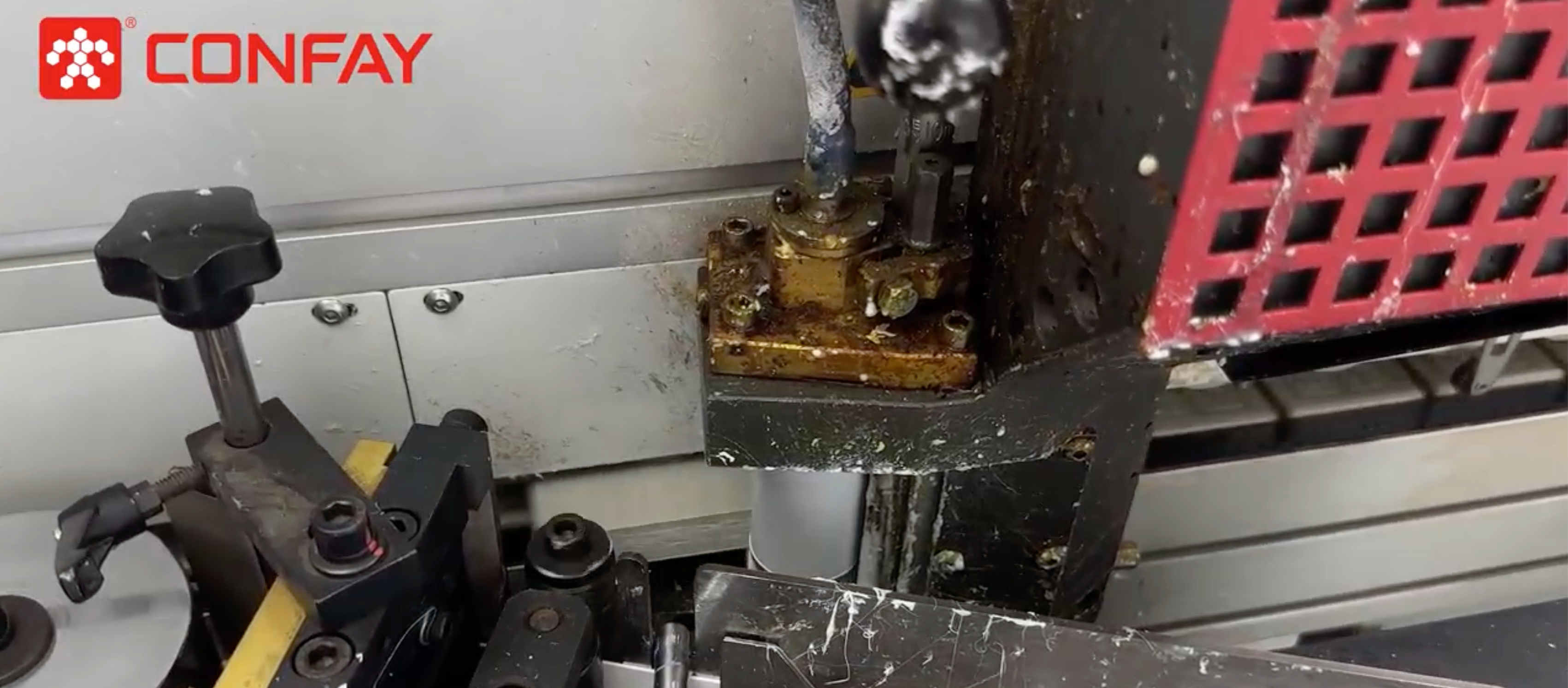
Instead of relying solely on the machine display, use an external thermometer to measure the actual glue temperature.
Then compare the measured value with the adhesive supplier's recommended processing range.
A simple temperature calibration often solves many bonding problems.
Step 2: Check Pressing Pressure and Glue Application
Even when the adhesive temperature is perfect, insufficient pressure or poor glue distribution can still cause edge banding failure.
These two factors work together.
Is the Pressing Pressure High Enough?
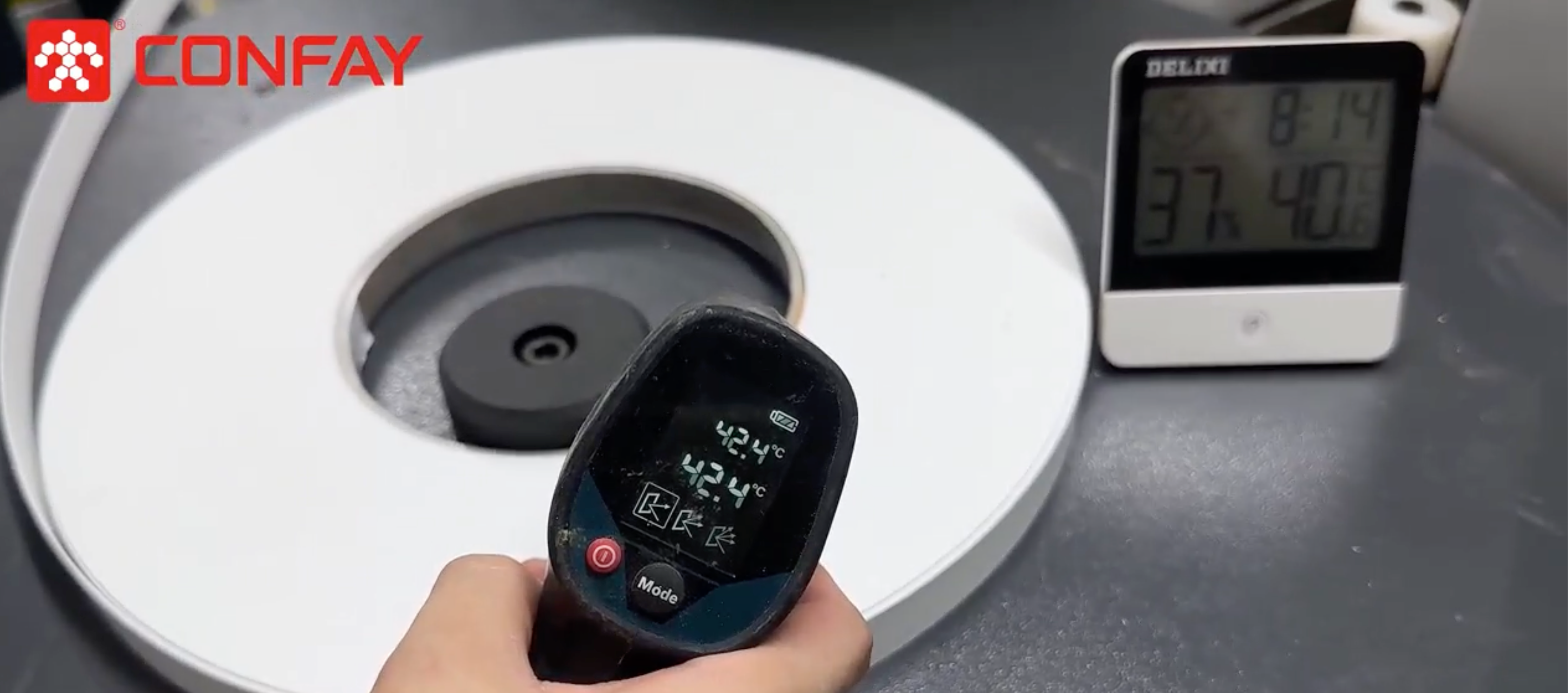
The pressure rollers must provide sufficient force to press the edge band firmly against the panel while the adhesive is still active.
If pressure is too low:
Air remains trapped
Contact area decreases
Initial adhesion becomes weak
Small gaps appear
Eventually, these small defects develop into edge opening.
Is the Glue Coating Uniform?
Besides pressure, glue quantity is equally important.
Too little adhesive means:
Insufficient bonding area
Poor substrate wetting
Weak edge sealing
Too much adhesive creates:
Glue squeeze-out
Thick glue lines
Increased cleaning requirements
Higher material consumption
The ideal glue layer should completely and evenly cover the bonding surface without excessive overflow.
Inspect the glue roller regularly to ensure stable coating thickness across the entire panel width.
Step 3: Adjust the Open Time
If both temperature and pressure have been optimized but bonding is still unsatisfactory, the next parameter to check is open time.
What Is Open Time?
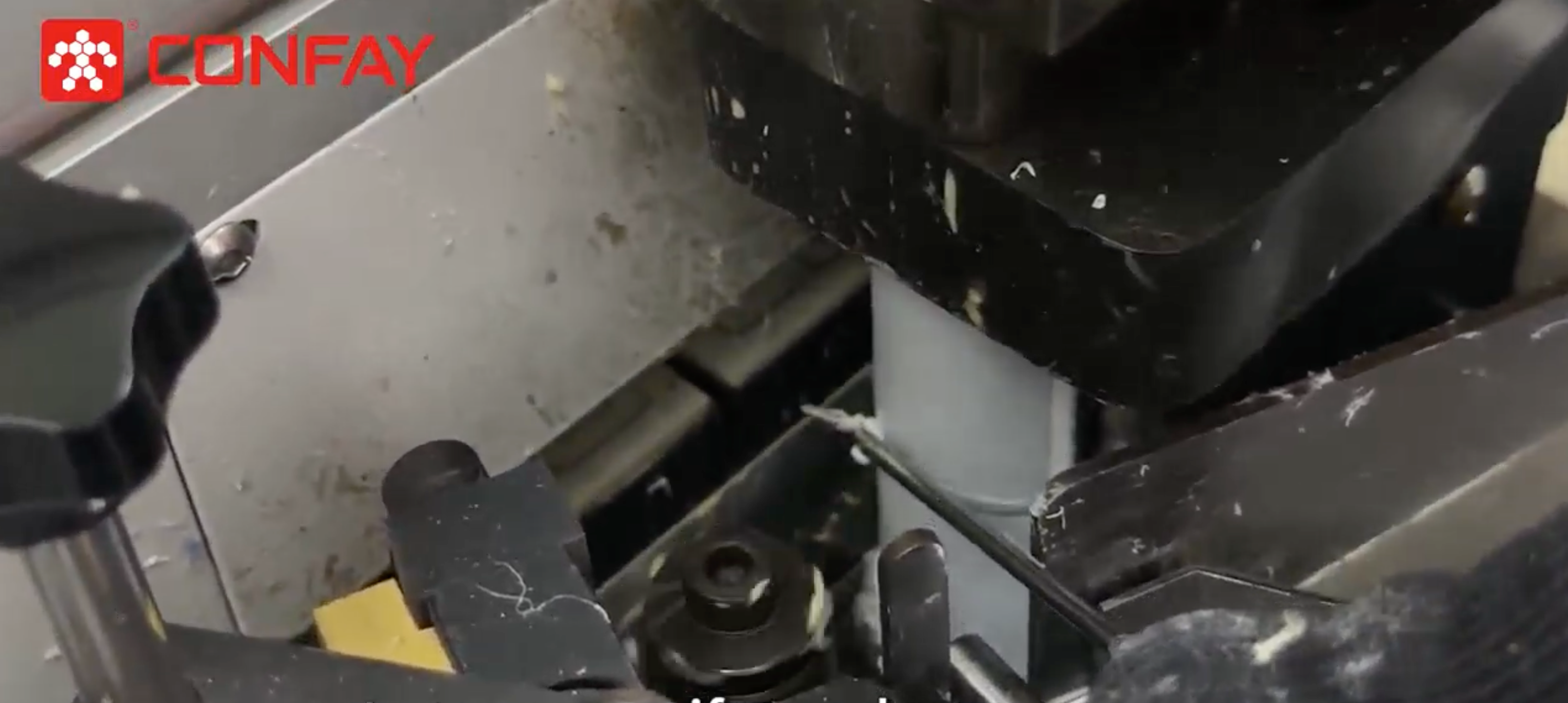
Open time refers to the period between glue application and pressing.
During this time, the adhesive spreads across the substrate and develops its initial bonding capability.
If pressing occurs too early or too late, bonding quality may decline.
Why Longer Open Time Sometimes Helps
Certain substrates—including MDF, plywood, plywood with coatings, aluminum honeycomb panels, and high-density boards—require additional time for the adhesive to wet the surface effectively.
Appropriately increasing open time allows the adhesive to:
Spread more evenly
Penetrate microscopic surface irregularities
Improve wetting performance
Increase initial tack
Enhance final bonding strength
Of course, open time should always remain within the adhesive manufacturer's recommended processing window.
Four Variables That Determine Edge Banding Quality
Successful edge banding depends on balancing four key variables:
| Parameter | Effect on Bonding |
|---|---|
| Temperature | Controls adhesive viscosity and flow |
| Pressure | Ensures intimate contact between edge band and panel |
| Glue Application | Determines coating uniformity and bonding area |
| Open Time | Allows sufficient wetting before pressing |
When these four variables are properly adjusted, even demanding edge banding applications can achieve excellent bonding consistency.
Additional Tips for Stable Edge Banding
To further improve production quality, we recommend:
Calibrate temperature sensors regularly.
Clean glue rollers and glue pots according to maintenance schedules.
Use adhesives compatible with your substrate materials.
Store PUR adhesive in sealed, moisture-free conditions.
Replace worn pressure rollers when necessary.
Train operators to monitor glue appearance and machine parameters during production.
Small adjustments in daily maintenance can significantly reduce rework and downtime.
How Confay Helps Customers Improve Edge Banding Performance
At Confay Adhesive Technology (Guangdong) Co., Ltd., we do more than supply PUR edge banding adhesives.
We work closely with furniture manufacturers to optimize the entire bonding process, including:
PUR adhesive selection
Temperature recommendations
Machine parameter optimization
Edge banding troubleshooting
Technical application support
Production efficiency improvement
Our goal is to help customers reduce defects, lower production costs, and achieve consistent, high-quality edge banding.
Conclusion
If your edge banding isn't sticking properly, don't assume the adhesive is to blame.
Start with these three troubleshooting steps:
✅ Step 1: Verify the actual glue temperature.
✅ Step 2: Check pressing pressure and glue application.
✅ Step 3: Optimize the adhesive open time.
By carefully adjusting these parameters, you can eliminate most edge bonding problems without changing adhesives, improving production efficiency and product quality at the same time.
Frequently Asked Questions (FAQ)
1. Why is my edge banding peeling off after cooling?
The most common causes are incorrect glue temperature, insufficient pressing pressure, uneven glue application, or inadequate open time. Check these machine settings before replacing the adhesive.
2. How can I accurately measure PUR adhesive temperature?
Use a calibrated digital thermometer to measure the actual temperature inside the glue pot or on the glue roller. Do not rely solely on the machine's display value.
3. Can too much glue reduce bonding quality?
Yes. Excessive glue can create thick glue lines, increase squeeze-out, extend cleaning time, and may even weaken bonding consistency.
4. Does increasing pressure always improve bonding?
Not necessarily. Pressure should be optimized according to the edge banding material, panel type, and adhesive specification. Excessive pressure may squeeze out too much adhesive, while insufficient pressure prevents proper contact.
5. When should I consider changing the adhesive?
Only after confirming that temperature, pressure, glue application, and open time are correctly adjusted. In many cases, machine settings—not the adhesive—are responsible for bonding failures.
Contact Confay for Professional Edge Banding Solutions
If you're experiencing persistent edge banding issues, our technical team is ready to help. Simply provide:
Your adhesive model
Edge banding material (PVC, ABS, veneer, aluminum, etc.)
Board type (MDF, plywood, particleboard, aluminum honeycomb, etc.)
Machine brand and model
Photos or videos of the bonding issue
Our engineers will analyze the problem and recommend the most effective adhesive and process adjustments.
Confay Adhesive Technology (Guangdong) Co., Ltd. specializes in high-performance PUR and woodworking adhesives, helping manufacturers achieve stronger bonding, cleaner edge finishes, and more stable production.
🌐 Website: https://www.confay.cn
📧 Contact us: Reach out through our website for product recommendations, technical consultation, or bulk order inquiries.
Need expert advice? Leave your adhesive model and describe your edge banding problem. The Confay technical team will help you identify the root cause and recommend the right solution for your production line. This hands-on technical support not only solves current issues but also helps optimize long-term manufacturing efficiency.
