

In the aluminum honeycomb panel processing industry, edge opening and delamination are common problems that trouble many manufacturers. Even when advanced edge banding equipment is used, unstable bonding can still occur during transportation, high-temperature environments, or long-term use.
In most cases, aluminum honeycomb edge sealing problems are not simply caused by the machine itself. The real issue is usually related to the compatibility between the adhesive and the substrate, as well as the bonding performance of the edge banding glue.
At Confay Adhesive Technology (Guangdong) Co., Ltd., we have helped many furniture and panel manufacturers improve aluminum honeycomb edge bonding stability through optimized adhesive solutions and application support.
So, why does aluminum honeycomb panel edge opening happen so easily? And what adhesive properties should manufacturers pay attention to?
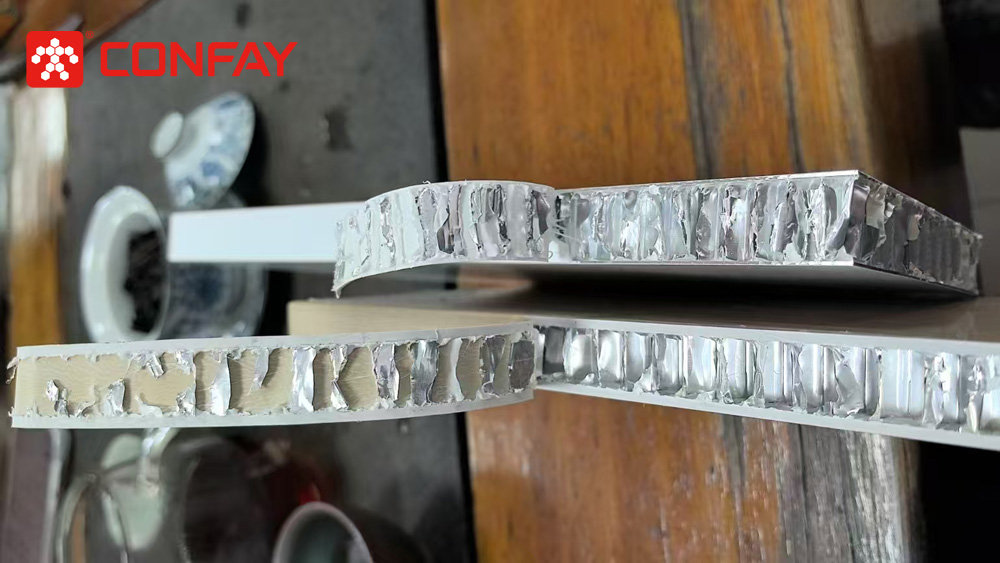
Why Aluminum Honeycomb Panels Are More Difficult to Bond
Compared with ordinary wood boards, aluminum honeycomb panels have a more complex structure and surface property.
Their typical structure includes:
Aluminum surface layers
Honeycomb core structure
Composite bonding layers
Decorative surface materials
Because aluminum has lower surface absorption than wood, ordinary edge banding adhesives may struggle to achieve sufficient wetting and penetration.
At the same time, aluminum honeycomb panels are often used in:
High-end furniture
Interior decoration
RV and yacht interiors
Commercial partition systems
Cleanroom panels
Lightweight architectural applications
These environments require stronger bonding durability, heat resistance, and long-term stability.
If the adhesive selection is improper, problems such as edge opening, bubbling, displacement, and delamination can easily occur.
Key Reason 1: Adhesive and Substrate Matching Problems
One major cause of edge opening is the mismatch between adhesive type and substrate material.
Some factories prepare separate adhesives for:
Wood panels
Aluminum panels
Composite materials
However, switching between different adhesives often increases:
Machine adjustment time
Temperature calibration complexity
Glue compatibility risks
Production instability
A Better Solution: Universal Aluminum-Wood Edge Banding Adhesive
Using aluminum-wood universal edge banding adhesive can significantly simplify production management.
Advantages include:
Better compatibility with mixed substrates
Reduced adhesive switching frequency
Lower machine testing costs
More stable production performance
Improved processing efficiency
For manufacturers handling both wood and aluminum honeycomb materials, universal edge banding adhesives help reduce operational errors while maintaining stable bonding quality.
Key Reason 2: Initial Adhesion Strength Is Too Weak
Another critical factor is the initial tack strength of the adhesive.
During edge banding, the glue must quickly create enough bonding force immediately after pressing.
If the initial adhesion is insufficient:
The edge banding strip may shift
The edge may rebound slightly
Small gaps may appear
Bonding stress becomes uneven
Although the panel may initially appear bonded, hidden risks remain inside the glue line.
After transportation, cutting, or exposure to heat, edge opening and delamination may gradually appear.
Why Final Bonding Strength Matters
Initial adhesion alone is not enough.
A high-quality edge banding adhesive should also provide strong final bonding strength after complete curing.
This is especially important for aluminum honeycomb panels exposed to:
Summer heat
High-temperature workshops
Long transportation periods
Humid environments
Heavy daily use
If the adhesive lacks sufficient heat resistance or cohesive strength, the glue line may soften or weaken over time.
This eventually causes:
Edge detachment
Corner lifting
Delamination
Reduced product lifespan
When the adhesive provides both strong initial tack and excellent final bonding strength, the edge sealing performance becomes much more stable and reliable.
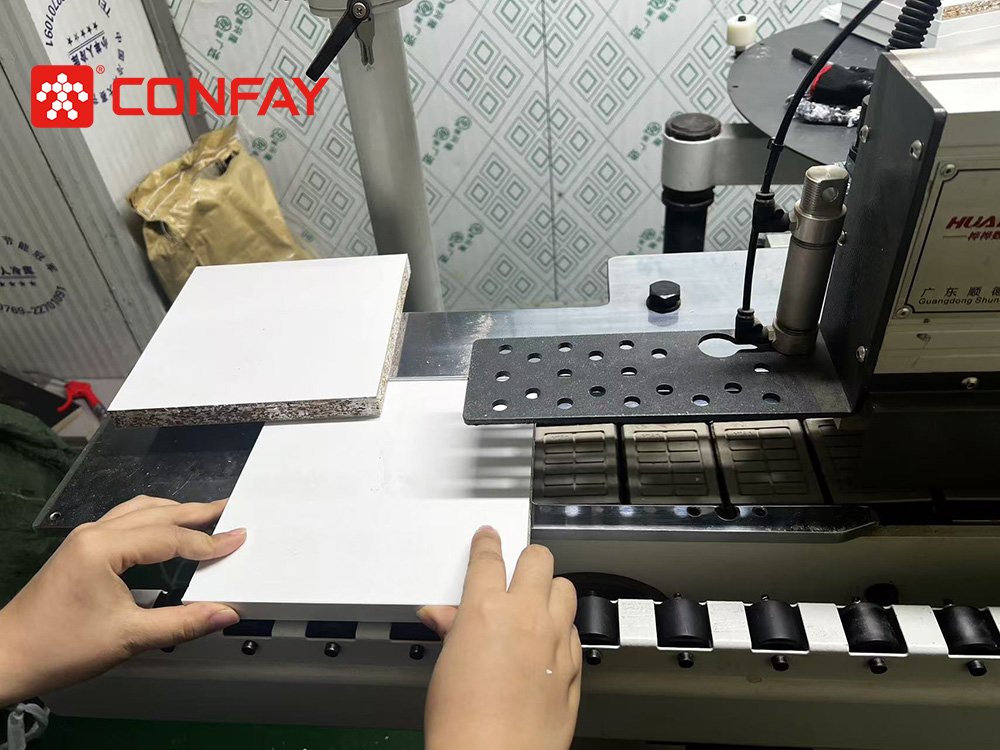
What Adhesive Properties Are Most Important for Aluminum Honeycomb Edge Banding?
When selecting edge banding adhesive for aluminum honeycomb panels, manufacturers should focus on the following properties:
1. Strong Initial Tack
Ensures immediate positioning stability after pressing.
2. High Final Bonding Strength
Provides long-term durability and prevents edge opening.
3. Good Heat Resistance
Maintains bonding performance under high summer temperatures.
4. Excellent Wetting Ability
Allows the adhesive to spread evenly across aluminum and composite surfaces.
5. Stable Flowability
Improves glue coating consistency during high-speed production.
6. Good Aging Resistance
Prevents glue brittleness and bond failure over time.
7. Compatibility With Multiple Substrates
Suitable for aluminum, wood, MDF, plywood, and composite panels.
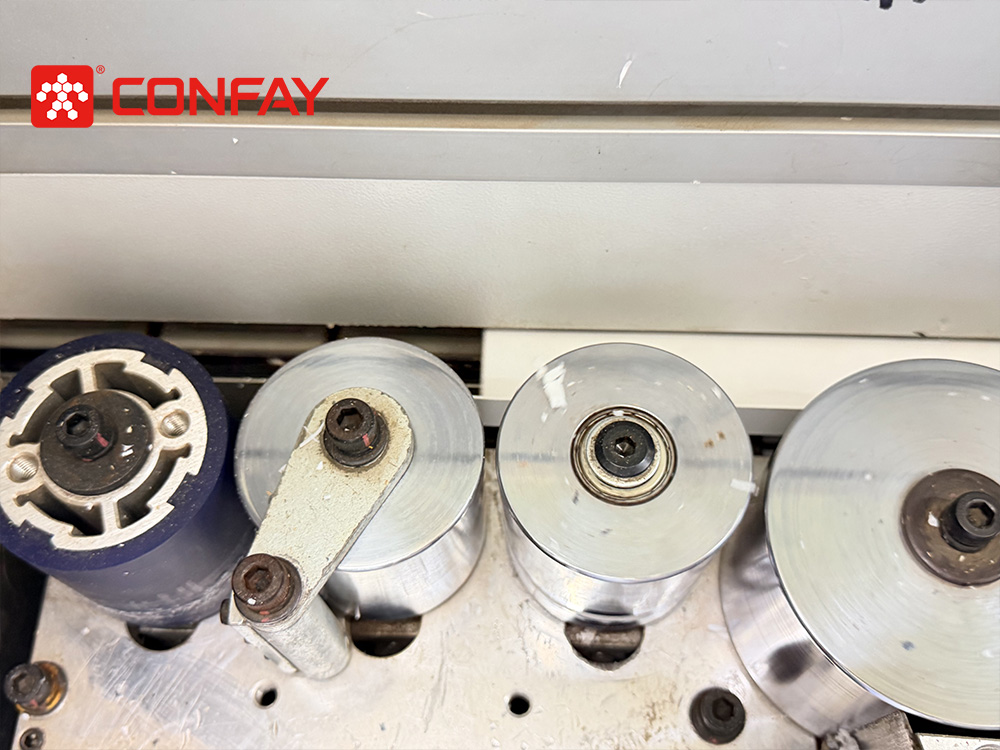
Common Causes of Aluminum Honeycomb Edge Opening
| Problem | Possible Cause |
|---|---|
| Edge opening after pressing | Weak initial tack |
| Delamination after transportation | Insufficient final bonding strength |
| Edge lifting in summer | Poor heat resistance |
| Uneven bonding | Poor adhesive wetting |
| Frequent machine adjustment | Multiple incompatible adhesive types |
| Glue line cracking | Low adhesive flexibility |
How Proper Adhesive Selection Improves Production Efficiency
Choosing the right edge banding adhesive not only improves bonding quality but also enhances factory productivity.
With stable adhesive performance, manufacturers can achieve:
Faster machine setup
Reduced testing time
Lower material waste
More consistent bonding results
Reduced customer complaints
Higher production efficiency
This is especially important for factories running continuous large-scale panel processing lines.
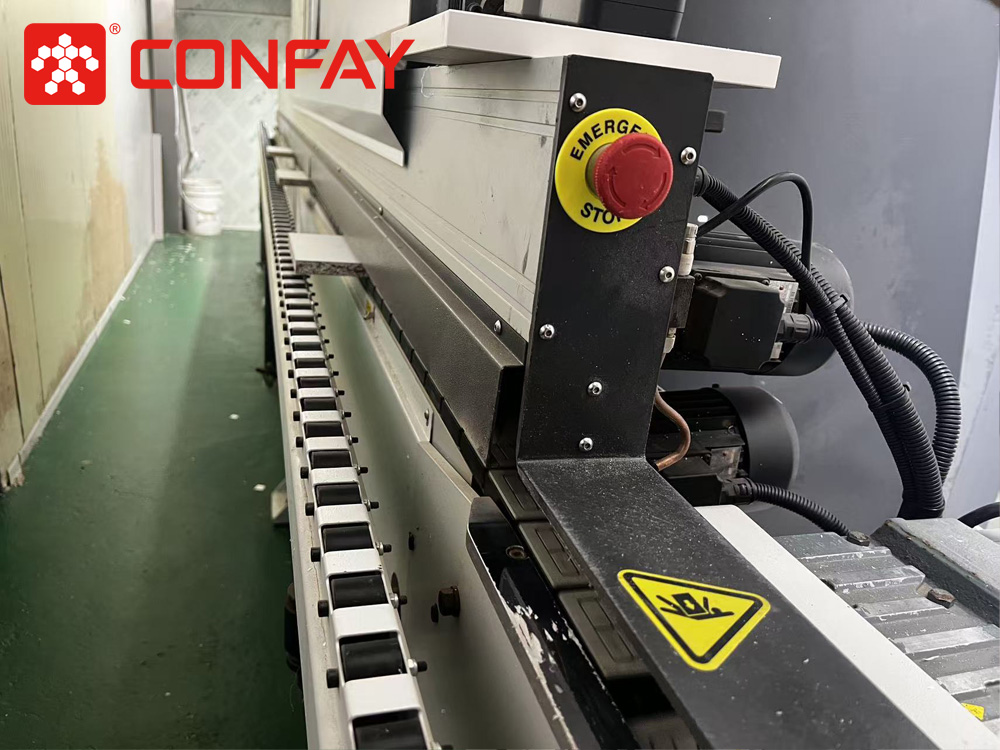
Confay Edge Banding Adhesive Solutions
At Confay Adhesive Technology (Guangdong) Co., Ltd., we specialize in woodworking and industrial adhesive solutions designed for modern panel manufacturing applications.
Our aluminum honeycomb edge banding adhesive solutions are developed to provide:
Excellent initial adhesion
Strong final bonding strength
High-temperature resistance
Stable machine processing
Reliable aluminum-to-wood compatibility
Reduced edge opening risks
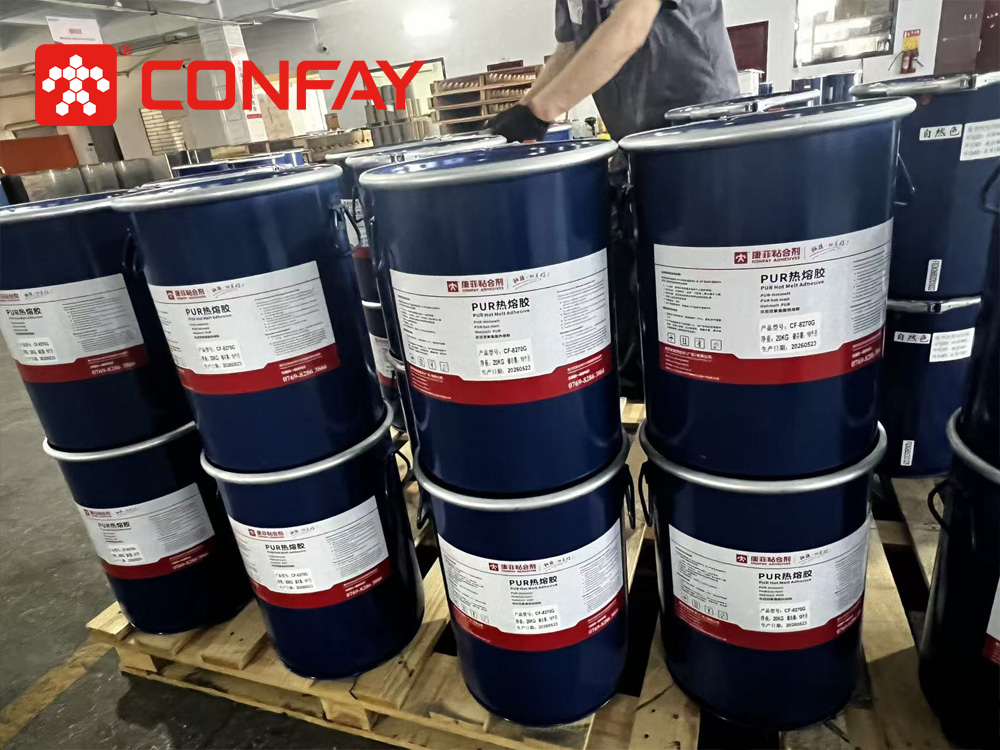
We also strictly control every loading and shipment process to avoid:
Product damage
Material mixing
Quantity shortages
Transportation risks
This helps ensure stable product quality from factory delivery to customer production lines.
Conclusion
Aluminum honeycomb panel edge opening is usually related to adhesive compatibility and bonding performance.
To improve edge sealing quality, manufacturers should focus on two essential points:
Selecting universal aluminum-wood edge banding adhesive
Choosing adhesives with strong initial tack and excellent final bonding strength
When the adhesive system matches the substrate properly and maintains stable performance under high-temperature conditions, problems such as edge opening, delamination, and weak bonding can be significantly reduced.
This not only improves product quality but also enhances processing efficiency and long-term production stability.
For professional aluminum honeycomb edge banding adhesive solutions, contact Confay Adhesive Technology (Guangdong) Co., Ltd..
Bulk adhesive inquiries:
cindyxu@confay.cn
FAQ About Aluminum Honeycomb Edge Banding Adhesive
Why do aluminum honeycomb panel edges open easily?
The main causes are poor adhesive compatibility, insufficient initial tack, and weak final bonding strength.
Can one adhesive work for both aluminum and wood panels?
Yes. Universal aluminum-wood edge banding adhesives are designed to improve compatibility across different substrates.
Why is initial tack important in edge banding?
Strong initial tack prevents shifting and rebound immediately after bonding.
What causes edge opening in hot weather?
Poor heat resistance may soften the adhesive under high temperatures, leading to edge detachment.
How can manufacturers reduce edge banding defects?
Using stable, high-performance edge banding adhesives and maintaining proper machine settings can significantly improve bonding consistency.
